Showing posts with label AVOCADO. Show all posts

Sunday, November 2, 2014

Not All Wine Is Vegan And Gluten FreeFind Out What's In Your WineTry Our 2012 Turtle Vines Pinot Noir

Our Turtle Vines Pinot Noir is raw, vegan, unfined, unfiltered, gluten free and made from certified organic grapes.

Follow Foods For Long Life on Facebook and Pinterest.
Download my eBook, Health Begins in the Kitchen,
on Amazon and iTunes.

What's in your Wine?
Even if you're not a vegan you may not relish the idea that the wine you are drinking was mixed with gelatin from pigs, cows, and fish bladders, egg whites, and other distasteful animal ingredients, during the winemaking process. And for those of you who are lactose or gluten intolerant, you may be concerned that milk protein and wheat gluten may also have been used. 

Why is this done?
Many wineries have a formula for making wine that produces a consistent product from year to year that is less dependent on the quality of the grapes they use. The commercial process that is used to create a clear and stable wine or to fix defects is calling "fining". 

Fining
Fining is the operation of adding one or more compounds to wine to bring it into balance and keep it there. Many of these compounds are from animals, gluten and other surprising materials. Although these compounds are filtered out of the wine before it is bottled and sold, there potentially could be some residue in the wine, albeit very minuscule amounts. Here's are some examples:
* Isinglass (fish bladder) is used to clarify wine.
* Gelatin (pork, cow and fish skin and bones) clarifies wine and removes excess tannins.
* Plant proteins (either green peas or hydrolyzed gluten) is used to clarify wine and remove excess tannins. Pea protein is appropriate for vegan wines.
* Egg albumin is used to clarify wine and remove astringencies in red wine.
* Potassium caseinate (milk protein) improves aromatic defects and treats oxidized wines.
* PVPP (plastic) is used to treat bitterness.
* Bentonite (clay) is used for rapid clarification and to treat protein-unstable wines.Bentonite is appropriate for vegan wines.

Is Fining Necessary?
Our Turtle Vines Pinot Noir is not fined or filtered. No animal products, plastic, or gluten is used in the production of our wine. It is simply not necessary.

To achieve clarity, we "rack" our wine. Racking is the process of letting the wine settle and then siphoning it into another vessel. This is done three times. Occasionally there is a bit of residue at the bottom of our bottles but that doesn't bother us - it's better than adding these odd and distasteful compounds listed above.

To balance our tannins, we "cold soak" our destemmed (and about 5% whole-cluster) grapes for five to ten days before fermentation to bring out the beneficial, water soluble skin tannins. 
We prevent excess tannins by ending fermentation and pressing the wine before the wine goes completely dry. This controls excess tannins from the grapes seeds by limiting how long they soak in the fermented wine.

Tannins can also seem out of balance if the acidity and alcohol levels are inappropriate. Acid levels are controlled by measuring and adding tartaric acid when necessary. Correct alcohol levels are controlled by picking the grapes when their target sugar content (and flavor) is achieved. With the proper acidity and alcohol levels, fining is not necessary to adjust tannins. 

All these methods of carefully balancing tannins prevents having to deal with astringencies and bitterness.


Cold soaking before fermentation 

Controlling aromatic defects is much easier to control when you grow and hand-pick your own grapes. At Turtle Vines we examine every grape cluster continually throughout the growing season, discarding any that have mold or mildew or that are not ripe enough to pick. Many large wineries machine-harvest their grapes allowing more bad grapes to end up in the fermentation tank. 

The Importance of Organic Grapes
When you go grocery shopping for grapes, many of you buy those that are organically grown. Every year table grapes are listed as one of the Environmental Working Groups "Dirty Dozen". Their 2014 audits showed that table grape samples has residue of at least 15 pesticides. But when you buy a bottle of wine, most people don't even think about whether or not the grapes used to make the wine are organic. Conventionally grown wine grapes can be treated with synthetic pesticides, fungicides, insecticides, and fertilizers. 

According to the California Department of Pesticides Regulation, 25 million pounds of pesticides were applied to conventionally-grown wine grapes in California in 2010. These wine grapes had far more pesticides than table grapes. According to the USDA Pesticide Data Program, there are up to 34 different kinds of pesticide residues found on conventionally-grown grapes! 

Our grapes at Turtle Vines Vineyards are certified organic by the California Certified Organic Farmers Association. It is not only important for our wine to be free of these toxins to protect you, but we did not want ourselves, our workers, our neighbors, or wildlife to be exposed or subjected to these harmful chemicals. 

We do not, however, make organic wine. The difference between organic wine and wine made from certified organic grapes is that organic wine does not allow for the addition of sulfur dioxide. Since sulfur dioxide prevents bacterial spoilage, very few wines are made organically as they have a short shelf life. We feel that the majority of benefits to the consumer are obtained by wine being vegan and made from certified organic grapes. 


Is Wine Raw?
During fermentation, temperatures rise but generally stay below 85 degrees so, from that standpoint, wine is considered raw. However, some winemakers add sugar during the winemaking process to achieve their target alcohol content (not to make the wine sweeter). Unless the sugar used was raw sugar, some would consider this wine not to be raw. 

This process of adding sugar to wine is called "chaptalization" and it is generally done in regions that have poor climate and produce grapes with low sugar content. This practice is illegal in Argentina, Australia, Austria, California, Italy, and South Africa. So you can be assured that wines from these regions were not made with sugar. Our California wines have plenty of sunshine and ample sugar content and don't need this added sugar.

Our 2012 Turtle Vines Pinor Noir is Now Available
If you are interested in purchasing our Pinot Noir, please go to our Turtle Vines Website.
Our wine is raw, vegan, unfined, unfiltered, gluten-free, and made with our hand-farmed organic grapes. 

The 2012 Pinot is about 80 percent Pommard and 20 percent 667 with a lower alcohol content of 13.0%. This produces a feminine style wine with a taste of ripened strawberry, currant, and cassis. It is a very versatile and food friendly wine which complements almost any dish from pasta to chocolate truffles!

If you mention Foods For Long Life, you will get additional 10% discount. Stock up for the holidays!


Mention Foods For Long Life and get an additional 10% off
our 2012 Turtle Vines Russian River Pinot Noir


Tuesday, July 29, 2014

What To Do With All Those Cherry Tomatoes?Make Yellow Pear Cherry Tomato Salad With Cucumbers, Avocado And Jalapeño

A delicious and simple way to use those cherry tomatoes
and other garden veggies. Only 53 calories per serving!

Follow Foods For Long Life on Facebook and Pinterest.
My eBook, Health Begins in the Kitchen,
is available on Amazon and iTunes.

My Garden Overfloweth
While my garden zucchini has taken much of my attention, these cute and very prolific yellow pear cherry tomatoes are gathering steam. My cucumbers and jalapeños are also holding there own so what better way to use them all up than in this simple raw salad! 


Raw yellow tomatoes are low in calories and are an excellent source of Vitamin C, niacin, folate, potassium, copper and manganese.

        *                          *                          *

Yellow Pear Cherry Tomato Salad
Raw Vegan, Gluten Free
[makes 6 servings]

2 cups halved yellow pear cherry tomatoes
2 cups peeled and diced cucumbers
1 avocado, peeled, seeded, and diced
2 tablespoons minced red onion
1 small jalapeño, thinly sliced (seeds optional)
1 tablespoon freshly squeezed lime juice, or more
1/2 teaspoon salt, or to taste
1/4 teaspoon black pepper, or to taste

Place the tomatoes, cucumbers, avocado, red onion, and jalapeño in a bowl. Sprinkle with lime juice, salt, and pepper and toss gently until well coated.

Per serving: 53 calories, 4 g total fat, 0.5 g saturated fat, 29 mg omega-3 and 441 mg omega-6 fatty acids, 0 mg cholesterol, 1 g protein, 5 g carbohydrates, 2 g dietary fiber, and 207 mg sodium.


Wednesday, June 11, 2014

And Here Come The Zucchini!Try This Delicious Raw Zucchini Salad

Baby zucchini are used in this chopped veggie salad.

Follow Foods For Long Life on Facebook and Pinterest.
My eBook, Health Begins in the Kitchen,
is available on Amazon and iTunes.

And Here They Come!
It's funny how excited I get when I harvest my first zucchini and how happy I am at the end of the summer when I pull the plants out for the season. To maintain my joy this year, I've made a promise to myself that I would harvest every zucchini while it is still relatively small. There are several advantages of doing this. First of all, the zucchini and its skin will be tender with few seeds. But most of all, it will keep me from being overwhelmed with the sheer amount of this prolific vegetable.


Female zucchini flowers

Do Your Zucchini Start to Fruit and then Wither?
As prolific as zucchini are, in the beginning of the season you may find that your plants begin to fruit only to wither. If you are having this issue, read last year's post on boy and girl zucchini flowers and how they need to develop before fertilization can take place.

Simple and Delicious Chopped Salad
Here's a simple chopped salad that uses tender baby zucchini. This raw vegan salad is gluten free and less than 100 calories per serving. It is suitable for weight loss and a raw food cleanse. And of course it is a delicious salad to serve anyone during the summer months when these wonderful fresh veggies are in season.

       *                          *                      *

Zucchini Salad
Raw Vegan, Gluten Free
[Makes six servings]

2 small zucchini, diced (2 cups)
1 red bell pepper, diced (1 cup)
Kernels from 1 ear corn (1 cup)
2 tablespoons minced red onion
1/4 cup chopped fresh cilantro
2 tablespoons fresh lime juice
1 tablespoon cold-pressed hemp oil
1/2 teaspoon salt
1/4 teaspoon black pepper
1 avocado, diced

Place the zucchini, red bell pepper, corn, red onion, and cilantro in a medium-sized bowl.


Make the dressing in a 2-cup container by combining the lime juice, hemp oil, salt, and pepper. Mix until the salt dissolves. 

Mix the avocado into the dressing and toss gently until well coated. 


Mixing the avocado into the lime dressing
helps prevent it from turning brown.

Pour the dressing and avocado over the chopped salad. Toss gently until all the veggies are well coated and serve.


Per serving: 98 calories, 6 g total fat, 1 g saturated fat, 0 mg cholesterol, 389 mg omega-3 and 1,887 mg omega-6 fatty acid, 2 g protein, 11 g carbohydrates, 3 g dietary fiber, and 205 mg sodium.

Update

Oops, we didn't get to this one in time. This guy was hiding under a big leaf!


Tuesday, May 20, 2014

Raw Spring Vegetable SoupLess Than 150 CaloriesLose Weight With A Raw Food Cleanse

Raw Spring Vegetable Soup - Vegan and Gluten Free!

Follow Foods For Long Life on Facebook and Pinterest.

Eating for Spring Time
With warmer weather comes access to more fruits and vegetables, allowing us to lighten up our diet. In Spring, I try to eat at least half of my food raw. And to lose a few pounds, get more energy, and detox from a winter of way too much fun, I do a raw food cleanse. 

Today's recipe is a simple raw soup that blends garden peas and kale with a creamy avocado and is topped with shredded carrots. Fresh garlic, lemon juice and cayenne provide the main seasoning. 

Eating raw soups is the perfect way to lighten up your spring diet and they are suitable for a raw food cleanse.

There are numerous posts on how to optimize the amount of raw food you eat throughout the seasons and how to do a Raw Food Cleanse on this site. But If you would like a more comprehensive summary of this information and more than 150 tested and optimized recipes, download my eBook, Health Begins in the Kitchen: Delicious and Easy Vegan Recipes and Seasonal Food Plan PLUS Raw Food Cleanse. It's only $9.99 and is available on Amazon and iTunes.

You Don't Need a Kindle or iPad to Read an eBook!
Some of you have written saying that you would like my ebook but don't have a Kindle or iPad. You can now download my eBook onto your computer with this free Kindle for PC reading AP. 


Enjoy today's recipe - it's becoming one of my favorite ways to enjoy my garden kale. And it's perfect for the warm weather and for your Raw Food Cleanse. Best of all, it's less than 150 calories per serving!


          *                     *                     *

Raw Spring Vegetable Soup 
Raw Vegan, Gluten Free
[makes 4 servings]
Requires a High Speed Blender

2 cups fresh peas, or frozen (thawed)
2 packed cups kale (cleaned with stems removed)
2 cups chopped celery
2 cloves garlic, chopped
1 avocado, peeled and seed removed
1/4 cup freshly squeezed lemon juice
2 cups water
1 teaspoon salt, or to taste
1/2 teaspoon black pepper
2 dashes cayenne pepper, or to taste
1 small carrot, peeled and shredded

Place all ingredients, except the carrot, in a high-speed blender, such as a Vitamix or Blendtec. Blend until smooth. Adjust for salt and pepper if needed.

Pour into 4 bowls. Top with shredded carrot and serve.

Per serving: 145 calories, 6 g total fat, 1 g saturated fat, 121 mg omega-3 and 777 mg omega-6 fatty acids, 0 mg cholesterol, 6 g protein, 20 g carbohydrates, 7 g dietary fiber and 720 mg sodium.


Monday, February 17, 2014

Pomelo And Avocado Salad, Raw & Gluten Free What's That Giant Yellow Thing In The Produce Department?

Pomelo is a bit sweeter than grapefruit - delicious with avocado!

Follow Foods For Long Life on Facebook and Pinterest.

The Giant Pomelo
For years I would walk past this giant yellow citrus in the grocery store, not really knowing what it was or what to do with it. But curiosity eventually overcame my reluctance and I brought one home. 

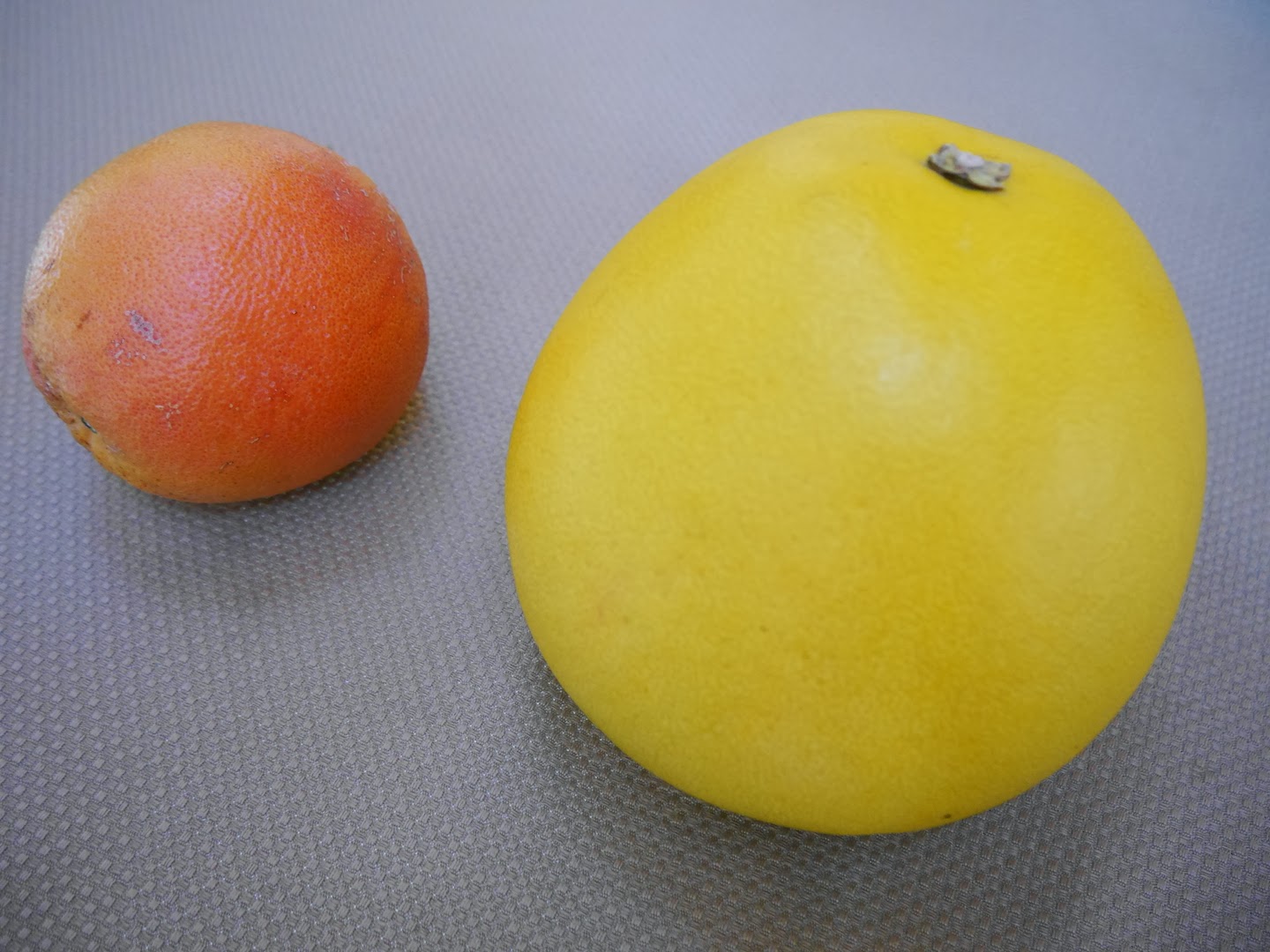
Pomelo, or citrus maxima, is native to Southeast Asia and tastes like a mild and sweeter grapefruit. It's dwarfs the size and price of a grapefruit. I paid $3.99 for a single organic pomelo in Whole Foods but it yielded over a pound of cleaned sections that are packed with vitamin C.

A pomelo (right) next to a very large grapefruit.
This pomelo weighed 2.5 pounds before cleaning.

How to Clean
I like to use everything I can on a pomelo so first I zest some of the skin. I use the zest in salad dressings and when baking muffins.

I use my microplane zester to grate the pomelo.

After getting enough zest, I use a potato peeler to remove some peel to use to flavor my water.

Pomelo peel adds a delicious flavor to drinking water.

To peel the pomelo, slice the top and bottom (enough to reach the top of the fruit.) Score the sides and peel off the thick skin. 


As you can see, the skin is quite thick.

Tear apart the sections and peel off the membrane to expose the flesh of the pomelo. The membrane is quite tough and thick and not pleasant to eat.

Removing the membrane takes a little patience
 but the effort is well worth it.
1 cup of pomelo sections provides:

72.2 calories
 0.1 g total fat
1.4 g protein
18.3 g carbohydrates
193% of the daily requirements of vitamin C


You can eat as is or toss in a fruit or green salad. I think it also screams "Italian Ice." I'll have to try that!

Like grapefruit, pomelo pairs beautifully with avocado. Here's a salad I made with that in mind.

    *                          *                           *

Pomelo and Avocado Salad 
Raw Vegan, Gluten Free
[makes 4 servings]

For the dressing
1 clove pressed or finely minced garlic
3 tablespoons freshly squeezed lemon juice
1 teaspoon grated pomelo zest
1 tablespoon extra virgin olive oil
1 tablespoon cold pressed hemp oil
1/4 teaspoon salt
1/8 teaspoon black pepper

For the salad
4 large handfuls of mixed organic greens
1 cup cleaned pomelo sections
1 peeled and sliced avocado
1/4 cup raw English walnut pieces

Make the dressing by mixing all dressing ingredients thoroughly. Set aside.

Toss the greens in a large bowl with enough dressing to coat, reserving some for the pomelo and avocado. Place in 4 individual salad bowls.

Place the pomelo and avocado in the large bowl and gently toss with a small amount of dressing to coat. Place one forth of the pomelo and avocado in each salad bowl spreading them evenly over the greens.

Top each salad with 1 tablespoon of walnut pieces and serve.


Per serving of salad: 135 calories, 10 g total fat, 1 g saturated fat, 701 mg omega-3 and 3360 mg omega-6 fatty acids, 0 mg cholesterol, 3 g protein, 10 g carbohydrates, 4 g dietary fiber, and 23 mg sodium.

Per tablespoon of dressing: 51 calories, 5 g total fat, 1 g saturated fat, 422 mg omega-3 and 1867 mg omega-6 fatty acids, 0 mg cholesterol, 0 g protein, 1 g carbohydrates, 0 g dietary fiber, and 117 mg sodium.

Saturday, February 1, 2014

Vegan Black Bean And Pear Taco Sliders Simple And Delicious For Your Super Bowl Party And Less Than 100 Calories Each!

Simple, healthy and delicious vegan taco sliders.

Follow Foods For Long Life on Facebook and Pinterest.

Great Dish for your Super Bowl Guests
One of the most important things for me, when I'm entertaining, is to make recipes that are simple to prepare and serve and will appeal to the most people. So if you are looking for a delicious, healthy, and simple dish to serve at your Super Bowl Party, these vegan and gluten-free taco sliders are an excellent choice.

Most of the ingredients for this dish are store bought, like the Tofutti sour cream, the shredded cabbage, the small corn tortillas, the canned black beans, and the salsa. Hopefully you can find all of these ingredients at your local super market.


I hope you  can find these wonderful tortillas.
They are 4 1/2 inches wide - perfect for sliders.
Organic means they are not GMO.
And they are only 30 calories each!
This ready-to-eat cabbage is very finely cut.
Of course you can make your own.
Fresh salsa is in the refrigerated section of your grocery store.
Pick several spice levels for your guests (mild, medium, hot)

Seasonal Fruit
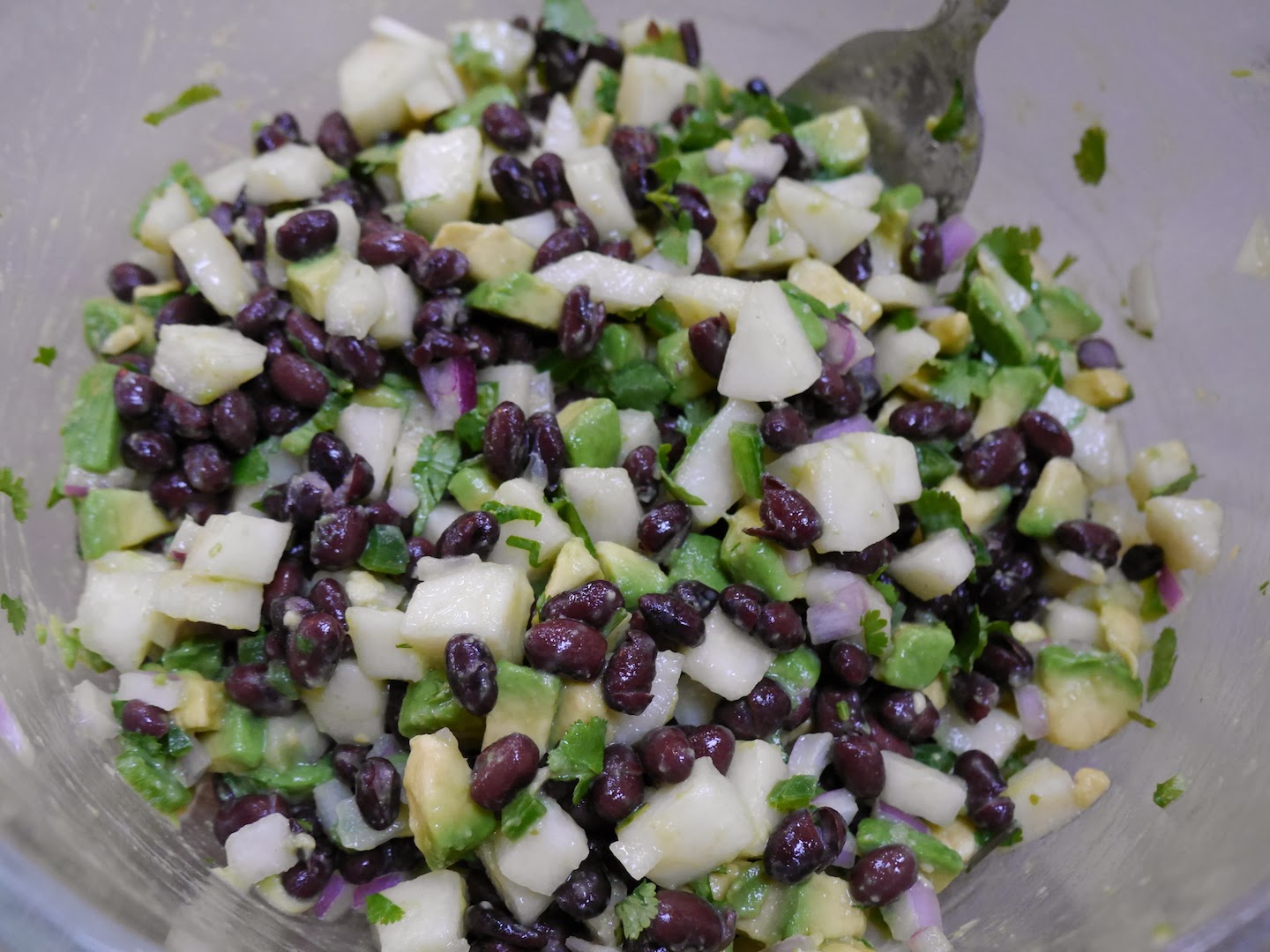
I love to mix fruit and beans together to make a salsa or taco filling. I usually mix mango or peaches in with my black beans. But I was curious to see if a nice ripe pear would combine well and I was delighted with the results! I know you will be too.


      *                           *                          *

Black Bean and Pear Taco Sliders
Vegan, Gluten Free
[makes at least 16 sliders]

2 tablespoons freshly squeezed lime juice
1 large pear, peeled and finely diced
1 avocado, finely diced
1/4 cup finely diced red onion
1/4 cup chopped fresh cilantro
2 tablespoons minced fresh jalapeño 
1 (15 ounce) can black beans, rinsed and drained
1/2 teaspoon salt or to taste
1 package of organic 4 1/2 inch corn tortillas (16 or more)
1/2 cup vegan sour cream
1 to 2 cups finely shredded cabbage 
A selection of fresh tomato salsas (mild to hot)

To make the slider filling, place the lime juice in a medium sized bowl.

As soon as you peel and dice the pear, mix it with the lime juice so that it will not discolor.
Do the same thing with the avocado.

Add the red onion, cilantro, jalapeño, black beans, and salt to the bowl and gently toss until combined.


Black bean and pear salsa with avocado and cilantro.


To make the slider, heat the tortillas. You can do this in several ways.
Wrap in a towel or a cotton tortilla holder and microwave for 20 seconds.
You can also wrap in aluminum foil and heat in the oven, or heat each individually on a grill until warm and pliable, about 15 seconds a side.


This tortilla holder can be used to heat tortillas in the microwave
or to keep oven-heated or grilled tortillas warm.

Place a warm tortilla on a plate and spread with a little sour cream, about 1/2 tablespoon. Top will a small amount of cabbage, about 1 tablespoon. It's important not to load down the slider so use small quantities of every ingredient.


Spread sour cream and sprinkle with a little shredded cabbage.


Place a small amount of the black bean and pear mixture over the cabbage.


Top with some fresh tomato salsa (mild, medium, or hot) and serve with a good beer.


Top with fresh salsa.
For additional delicious and healthy recipe ideas, download my eBook, Health Begins in the Kitchen available on Amazon and iTunes.

Per slider (without the tomato salsa): 98 calories, 3 g total fat, 1 g saturated fat, 0 mg cholesterol, 3 g protein, 16.5 g carbohydrates, 3 g dietary fiber, and 140 mg sodium.

Wednesday, July 3, 2013

Crunchy And Cool Summer Salad With Agave-Dijon Dressing - Perfect For Your July 4th Picnic!


Beat the heat with this raw vegan and gluten free salad
topped with agave-Dijon Dressing.

Follow Foods For Long Life on FACEBOOK .


Summer - Time to Eat More Raw Food
When the weather warms up, it's time to eat more raw food. Whether you're a vegan, vegetarian or meat eater, it's a good idea to consume lots of raw fruits and vegetables in the summer months. This blog and my ebook, Health Begins in the Kitchen, is based on a Seasonally Raw Food Plan which varies the amounts of raw food consumed with the seasons. In the winter when it's cold, our bodies crave cooked foods such as warm soups, cooked grains, and baked sweet potatoes. But for now, when the weather is hot and the farmer's market and summer gardens are flourishing, let's pile on the raw fruits and veggies!

Cool Off
We've had record breaking heat the last few weeks here on the West Coast so we've been living on raw smoothies and big salads. This simple salad makes a beautiful presentation and is very cooling for the body. The shredded cabbage and carrots give it a nice crunch. Agave is used as a substitute in this classic honey-mustard dressing for my many vegan followers but if you prefer honey, use it instead of agave.

                *                          *                            *

Summer Salad with Agave-Dijon Dressing
Raw Vegan, Gluten Free
[makes 4 servings]

For the dressing
1 tablespoon Dijon mustard
2 tablespoon rice vinegar or apple cider vinegar
2 tablespoons raw agave nectar
1 tablespoon cold-pressed hemp oil
1 clove garlic, pressed

For the salad
2 packed cups shredded red cabbage
1 large carrot, shredded (1 packed cup)
1 medium cucumber, peeled and diced
1/4 cup diced red onion
1 avocado, peeled, pitted and sliced
freshly ground black pepper

Make the dressing by placing all dressing ingredients in a small bowl. Whisk with a fork until well combined.


Combine all dressing ingredients in a small bowl.

Either make the salad on individual salad plates or on one large platter. 
Start by spreading the cabbage out as the base layer and then cover it with the carrots. 

Layer the shredded vegetables

Cover the carrots with cucumbers and then red onion.


Place slices of avocado around the cabbage on the bottom of the platter.
Cover with dressing, top with freshly ground black pepper and serve.


Per serving: 148 calories, 9 g total fat, 1 g saturated fat, 555 mg omega-3 and 2,612 g omega-6 fatty acids, 0 mg cholesterol, 2 g protein, 17 g carbohydrates, 4 g dietary fiber, and 36 mg sodium.

Monday, June 17, 2013

Vegan and Gluten-Free Kidney Bean Salad With Chili-Lime Dressing- Perfect For Summer Picnics And Barbecues!

Kidney bean salad with corn, avocados and red onion.

Follow Foods For Long Life on FACEBOOK .

SUMMER TIME ENTERTAINING
Summer is the time for friends to get together and enjoy an outdoor barbecue or picnic. When asked to bring a dish to share, be aware that many people have food sensitivities and eating preferences.  With hearty kidney beans, creamy avocados, crunchy fresh corn and a tasty chili-lime dressing, no one will suspect that this delicious salad is also rich in protein, high in fiber and perfect for those who avoid meat, dairy and gluten. And it couldn't be any easier to prepare!


         *                           *                           *                        *

Kidney Bean Salad with Chili-Lime Dressing
Vegan, Gluten Free
[makes 8 servings]

For the dressing:
1/4 cup freshly squeezed lime juice
1 tablespoon cold-pressed hemp oil
1 tablespoon extra virgin olive oil
1/2 teaspoon ground cumin
1/2 teaspoon ground chili powder
1/2 teaspoon salt, or to taste
1/4 teaspoon ground black pepper, or to taste

For the salad:
2 cans kidney beans, drained and rinsed
Kernels from 2 large ears corn
1 red bell pepper, diced (about 1 cup)
1 avocado, diced
1/2 cup diced red onion

Place dressing ingredients in a large bowl and whisk until well combined.

Add all salad ingredients and gently toss until evenly coated with dressing.

Refrigerate until ready to serve.

Per serving: 196 calories, 7 g total fat, 1 g saturated fat, 386 mg omega-3 and 1,790 mg omega-6 fatty acids, 0 mg cholesterol, 8 g protein, 29 g carbohydrates, 9 g dietary fiber and 485 mg sodium.


Thursday, April 25, 2013

Avocados Are Delicious And Healthy - Here's Why You Should Eat Them And 10 Ways To Enjoy Them!

Do NOT fear their fat content. Avocados are good for you!

Follow Foods For Long Life on FACEBOOK .

Good Fats and Good News
What can be better news than to learn that avocados are good for you? So many people worry about avocado's fat content but that is one of the very things that make them a healthy food!

Although most of the avocado's calories come from fat, it is good fat with unusual health benefits.
* Much of the fat is classified as phytosterols which have significant anti-inflammatory properties and are known to decrease inflammation in conditions such as arthritis.
* Avocados also contain PFA's (polyhydroxylated fatty alcohols) which also have anti-inflammatory properties.
* The third healthy fat in an avocado is oleic acid - the same beneficial fat that is found in olive oil. This monosaturated fat is linked with reducing the risk of heart disease. It also increases the absorption of carotenoids. Let me tell you why I think that is extraordinarily important!

Carotenoids and Avocados
Carotenoids are a class of powerful plant chemicals that found in many red, orange and yellow fruits and vegetables as well as dark green vegetables such as kale and spinach. Foods high in carotenoids can protect against cancers such as mouth, pharynx, larynx and lung.

Recent News on Carotenoids and Breast Cancer Prevention
Previous studies did not show a correlation between the reduction of breast cancer and higher intake of carotenoids like: beta-carotene, alpha carotene, lycopene and lutein. However, when they measured the actual blood concentrations of these carotenoids, they found a 20 to 30% decreased risk of breast cancer among those women with the highest concentrations! Perhaps dietary intake was not a good indicator because even though women ate a lot of carotenoids, they may not have been absorbing them. But when you detect high blood levels you know for sure they were absorbing the carotenoids and those were the people who showed the reduced breast cancer risk. Since avocados significantly increase the absorption of these critical, cancer-protecting plant chemicals, I would suspect that eating these delicious fruits would be help lower the risk of breast cancer. Read more about this link between Carotenoids and Breast Cancer Prevention at the AICR website.

And that's not all. Avocados are a good source of dietary fiber - one avocado providing 13.5 grams! They are also a good source of vitamin C, E, K, B6, folate and pantothenic acid as well as the mineral, potassium.

                    *                          *                           *                            

Ten Healthy Ways to Enjoy Avocados

#1 - Guacamole 
My absolute favorite way to eat avocado is in a guacamole dip. Just mash up a ripe avocado, leaving some nice chunks, with some finely diced red onion, fresh cilantro, fresh lime juice, salt and cayenne pepper to taste. 


Guacamole is a family favorite

#2 - Lunch and Dinner Salads
Avocados are a natural in salads. They go well with greens, tomatoes, beans, mangos, figs - you name it. And as I mentioned, adding avocado to carotenoid-rich fruits and vegetables significantly enhances their absorption. Salads containing one cup of avocado can increase the absorption of carotenoids by 200-400%!


Add avocados to salads

#3 - Raw Soups
Raw soups are refreshing and fun to serve when the weather is warm. You'll need a good  blender to make them. I use Avocados in raw soups to make them thick and creamy.  


This avospacho uses avocado for the creamy base
 and for the diced ingredients

#4 - Cream Cheese and Mayonnaise Replacement
Slather ripe avocado pulp or just place thin slices on an English muffin instead of dairy or non-dairy cream cheese. Or use it on sandwiches instead of mayonnaise. Avocados provide the same creamy texture as cream cheese and mayo and have much healthier fats.

#5 - Fruit Salads
Avocados make the perfect addition to your morning breakfast salad. If you just eat fruit in the morning, you'll be hungry again in 30 minutes. If you add an avocado, and perhaps some nuts and seeds, you will have more energy and less hunger throughout the morning.


Avocado makes a great addition to fruit salads

#6 - Garnish/Filling for Mexican Food
Use diced or sliced avocado as a garnish on top of tacos and enchilada or as a filling in burritos instead of sour cream. The creamy texture complements spicy food very well and has a cooling effect on the tongue.


Avocado garnish on top of enchilada casserole

#7 - Salsa
I use diced avocados in just about every one of my salsa recipes. One of my favorites is Manila mango salsa. Just chop up an avocado and a manila mango and toss with a little fresh lime juice with jalapeño, red onion and cilantro.


Manila Mango and Avocado Salsa

#8 - Potatoes
Baked potatoes get a bad wrap because of their popular unhealthy toppings such as butter, sour cream, bacon bits and cheddar cheese. But if you top them with tomato salsa and chopped avocados, they become a healthy dish. Especially because the fat in the avocado helps improve the absorption of the carotenoid, lutein, found in tomatoes!

#9 - Salad Dressings and Sauces
Blend an avocado in your favorite salad dressings and sauces instead of oil. It makes them thick and creamy. If they are too thick, you can add a touch of non dairy milk or water.  


Avocado Dill Sauce
A great substitute for hollandaise 

#10 - Smoothies
To add some healthy fats and to give your fruit and veggie smoothies some "staying power", add some avocado. It will help the absorption of the lutein and zeaxanthin carotenoids when you have a "green smoothie" with kale.

There are many other ways to enjoy this beautiful fruit but I just wanted to give you a few ideas. If you have others, please comment and share them with us!